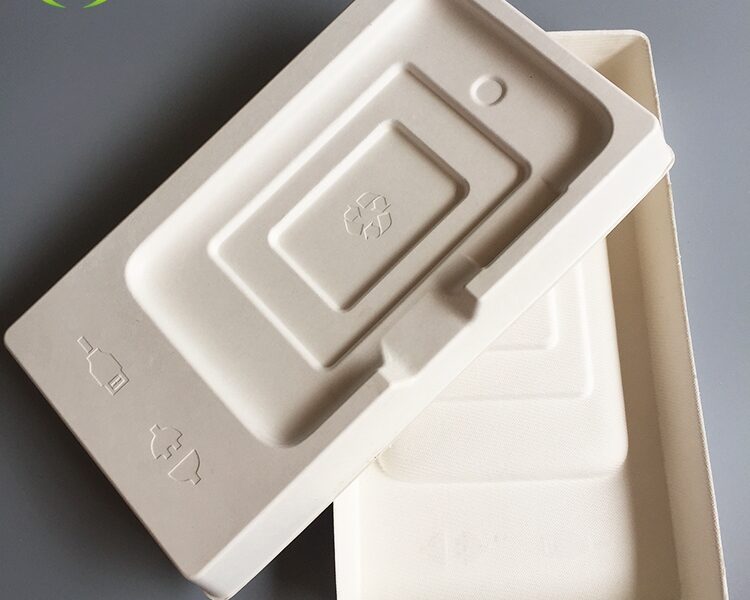
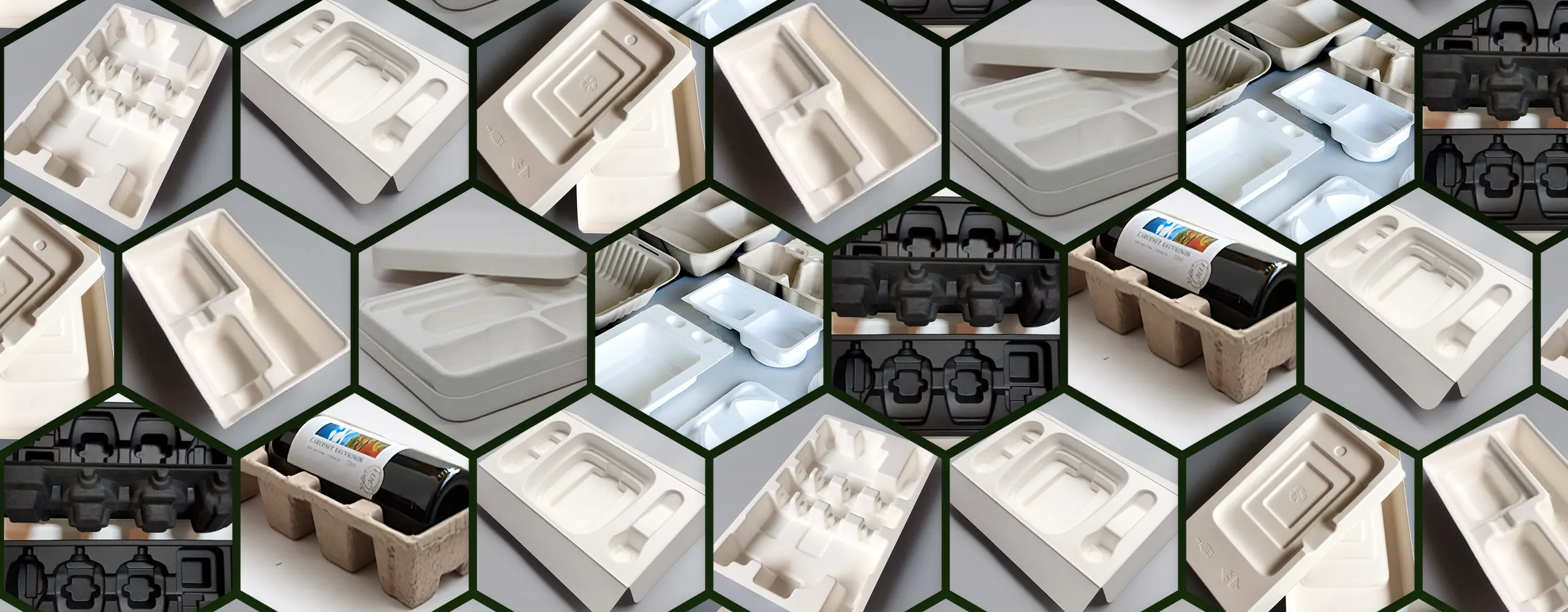
Molded pulp turns cellulose fiber into precisely shaped trays. Here is how it works, where it stands out and when it is not the best option.
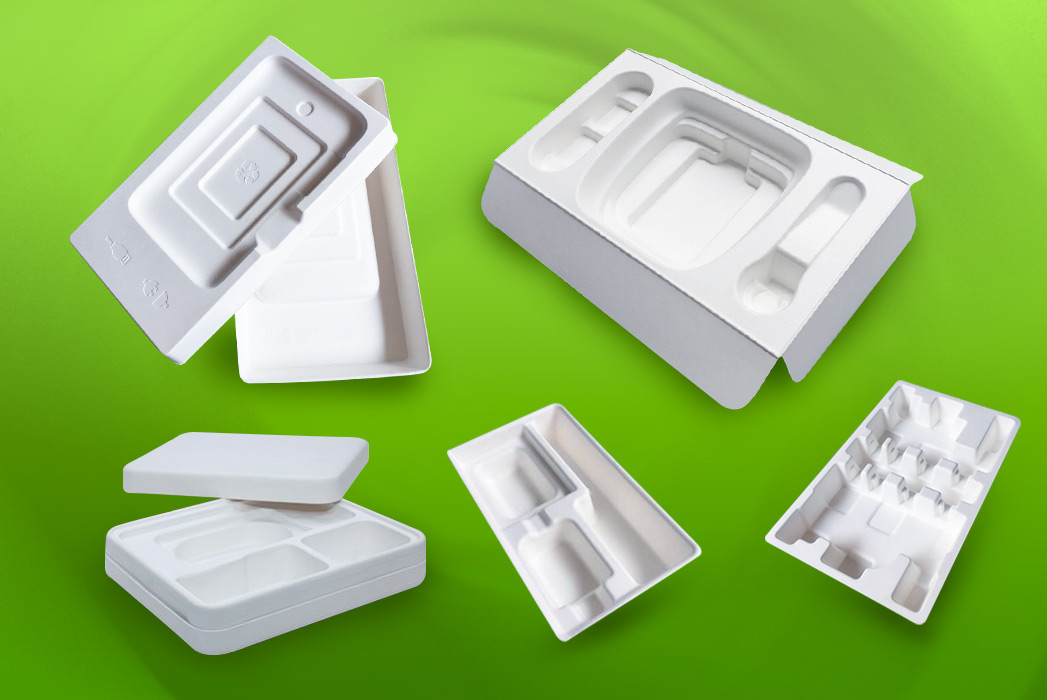
Molded pulp, also called molded fiber, is a packaging material formed from cellulose fibers such as recycled paper, bamboo or sugarcane bagasse. With molds and heat, the fiber takes the exact shape of the product it will protect. The result is a rigid tray that replaces many thermoformed plastic or foam parts.
For a purchasing or packaging engineering team, the question is not whether the material sounds good in a sustainability report, but whether it protects just as well, costs a reasonable amount and can be manufactured at scale. This guide answers those three questions.
What a pulp tray is made of
The raw material is plant fiber. The choice of fiber changes the finish, color and strength of the part:
- Recycled paper and cardboard: an economical option, common in protective trays.
- Virgin wood pulp: a cleaner, more uniform finish, useful when the tray is visible to the customer.
- Sugarcane bagasse and bamboo: short-cycle agricultural fibers, frequently used in fine-finish trays and food service.
How it is made
There are two main process families, and both start from fiber dispersed in water and collected on a mold. In the dry process, the part is oven-dried without pressing and comes out thicker, with a kraft look. In the wet process, the part is hot-pressed while still wet and comes out smooth, thin and precise. We explain the differences in our guide to dry-process and wet-process molded pulp.
Advantages over plastic
- Simple end of life: a fiber tray without plastic coatings enters the paper and cardboard recycling stream, something consumers already know.
- Protection by design: the tray’s geometry, with ribs and walls, absorbs impacts and holds the part in place.
- Brand perception: its natural look and feel immediately communicate that the company cares about its materials.
- Less dependence on resins: the part is not exposed in the same way to plastic prices.
Limits worth knowing
No material works for everything. A good evaluation also includes its limits:
- Tolerances: although precision processes achieve very good detail, fiber does not always match the tolerances of injection-molded plastic.
- Moisture: without treatment, fiber absorbs water. If your cold chain or warehouse is humid, this must be considered from the design stage.
- Mold investment: each geometry requires its own tooling, so volume has a strong influence on cost per part.
- Transparency: if your customer needs to see the product through the tray, you will have to solve that with a window or another solution.
Which industries are adopting it
Molded pulp is already common in consumer electronics, food and beverage, medical devices and cosmetics. What is demanded of the tray changes in each case: electrostatic control in one, food contact in another, premium presentation in another.
How to know if it is right for your product
Start with four pieces of data: the product’s weight and dimensions, annual volume, transport and storage conditions, and whether the tray will be visible to the end customer. With that, it is possible to assess feasibility and build a prototype before investing in a production mold.
Frequently asked questions
Is molded pulp the same as cardboard?
They share an origin in cellulose fiber, but they are made differently. Cardboard starts from sheets that are cut and folded; molded pulp is formed directly in three dimensions on a mold.
Can it be recycled?
Fiber trays without plastic coatings or laminates can usually be recycled with paper and cardboard. Any additive, ink or coating should be reviewed to confirm this, and the result also depends on local infrastructure.
Is it biodegradable?
Cellulose fiber is plant-based and biodegradable under the right conditions. If you want to use a commercial claim such as “compostable,” back it with a current certification of the final part.