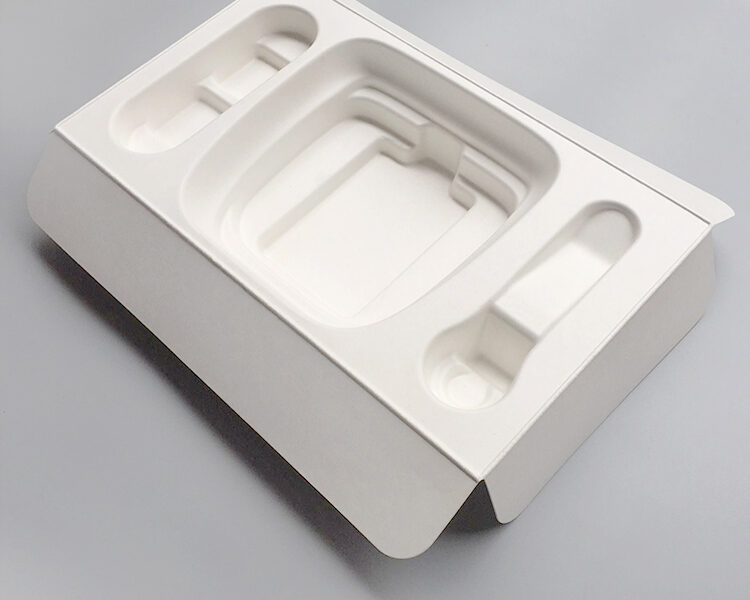
Protection, cost, tooling, logistics and end of life: an honest comparison for choosing between molded pulp and thermoformed plastic.
Many packaging change projects get stuck at the same table: sustainability wants fiber, purchasing wants the current cost and quality does not want risk. A comparison by criteria helps separate facts from assumptions.
The comparison in a table
| Criterion | Molded pulp | Thermoformed plastic |
|---|---|---|
| Raw material | Plant fiber | Resin (PET, PS, PP, etc.) |
| Protection | High with good design; cushions through geometry | High; depends on gauge |
| Detail precision | Good; very good in fine processes | Very good |
| Tooling | Dedicated metal mold, generally a larger investment | Mold is cheaper and faster to make |
| Moisture sensitivity | Higher, unless treated | Low |
| Transparency | No | Possible |
| Empty stacking | Good if the draft angle allows it | Very good |
| End of life | Paper and cardboard stream | Depends on the resin and local recycler |
Cost: look at the total, not the part
Comparing only the unit price usually leads to the wrong conclusion. Include in your analysis:
- Mold amortization over the product’s real lifetime.
- Freight and warehousing: how many trays fit per pallet and how much space they take up empty.
- Scrap and claims from damage in transit.
- Fees or extended producer responsibility in markets with packaging regulation, as we explain in our regulation guide.
- Commercial value: requirements from large customers already asking for packaging with less plastic.
Protection: validate it, do not assume it
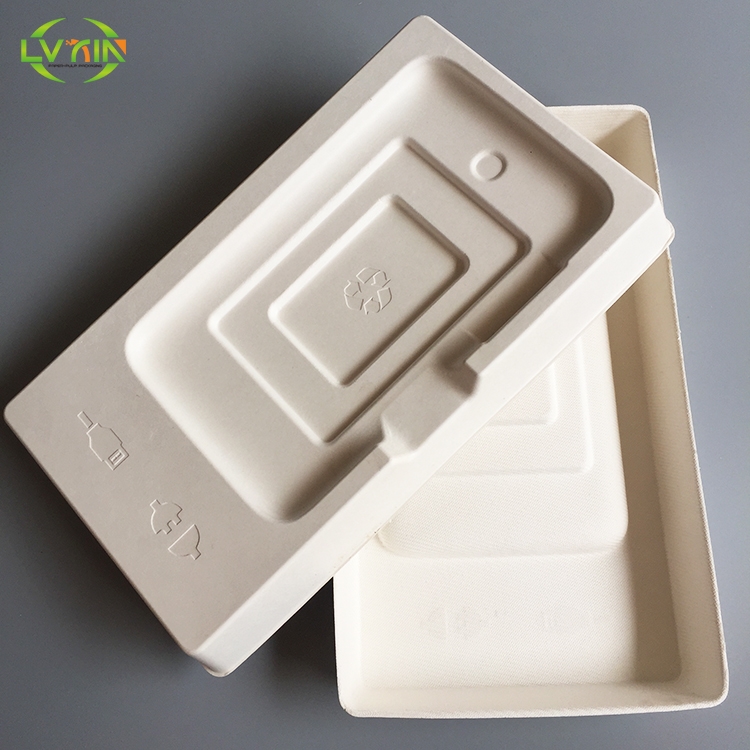
The right question is not which material protects more, but which design passes your tests. A well-designed fiber tray can outperform a plastic one in a drop test, and a poorly designed one can fail. The sensible approach is to prototype and repeat the same test you apply to your packaging today, such as an ISTA-type drop and vibration sequence.
When pulp usually wins
- High-volume products with a long life cycle, where the mold pays for itself.
- Brands with public plastic-reduction commitments.
- Products where the unboxing experience matters.
- Exports to markets with regulatory pressure on plastic.
When plastic may still make sense
- Very short runs in which the mold never pays for itself.
- High-humidity environments with no possibility of treatment.
- Products that must be seen through the packaging.
- Barrier requirements that fiber cannot reach on its own, except with coatings that need to be evaluated.
How to run a risk-free test
Choose a representative part number, gather your current cost data and ask for a proposal. With a prototype you validate the fit, run your tests and calculate total cost before committing to the investment. If you want to get started, tell us about your product or call us at +52 664 533 7077.
Frequently asked questions
Is molded pulp always more expensive than plastic?
Not always. It depends on volume, part size, resin price and logistics. The useful comparison is the total cost of the tray over the project, not the unit price.
Can I use the same design as my plastic tray?
Generally not. Fiber requires its own draft angles, radii and thicknesses. We start from the function and the part to be protected in order to redesign the tray.
Can a fiber tray handle an automated assembly line?
It can if this is considered from the design stage. Tolerances, gripping points and stacking need to be defined with your manufacturing team and validated with samples.